Cryptid sightings
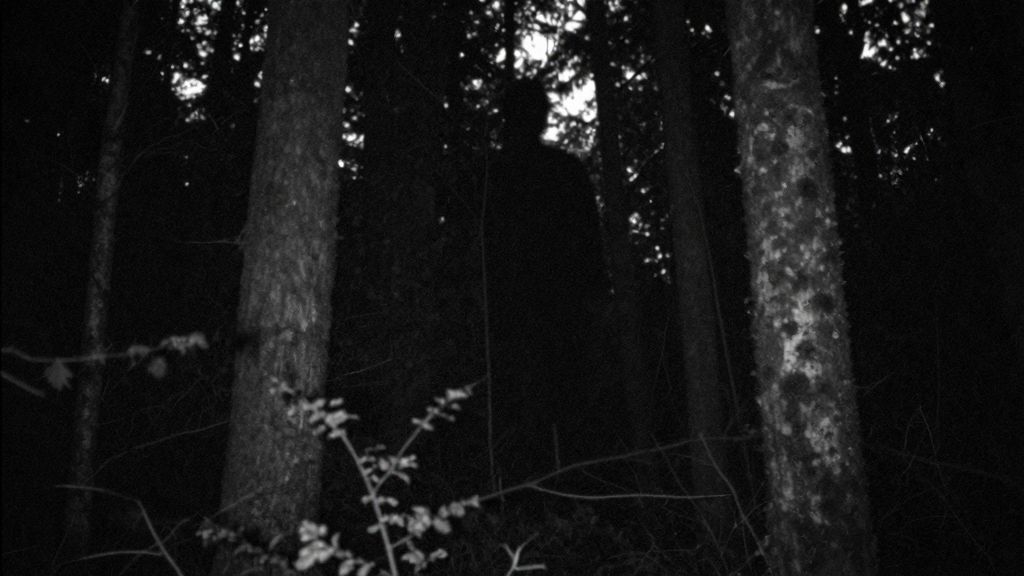
For as long as there have been forests, coastlines and dark water, people have come back from them describing a creature that should not exist: a figure at the tree line too tall and too heavy to be a man, a shape in the lake, a beast the local record has no name for. The registry holds these reports by the hundred.
Not one has ever reached the bar it sets for 'verified'. That emptiness is not a failure of the reports — it is the single most honest thing on this page, and the registry leaves it exactly that visible.
What the category is
A cryptid sighting report is an account of an encounter with a creature not recognised by science — a large unknown animal, a lake creature, a hair-covered figure, an unfamiliar beast. Lightf1ow catalogues the reports: who says they saw it, where, and how far the account can be traced. It takes no position on whether the creature exists.
This is the category where the honesty of the method is most exposed — which is exactly why it is worth showing carefully.
The moments that made the record
The sea serpents of the shipping press, 1800s. Nineteenth-century newspapers carried captains' and crews' accounts of great marine creatures, sometimes said to have survived volleys of gunfire. The archive layer holds examples from the 1890s onward.
Regional lake and forest traditions. Across continents, specific bodies of water and specific woods accumulate a continuous local record of encounters — the same shapes, reported by strangers who never met.
The coelacanth caveat, 1938. The coelacanth is a large, ancient fish that science believed had been extinct for some 65 million years — known only from fossils — until a live one was hauled up in a fishing net off the coast of South Africa. Every side of the cryptid debate cites it, because it is the clearest proof that a creature dismissed as impossible can turn out to be swimming in the sea. It is also cited by sceptics for the opposite reason: in nearly a century of looking, it remains almost the only example — a rediscovery this dramatic is vanishingly rare.
The reporting shape is distinctive: a single witness or small group, a specific place, and — almost always — no second independent line of evidence. That shape is exactly what the evidence distribution below reflects.
Why this is contested
Every camp, fairly stated; a side for none. This is the chapter only a registry can write — we are the one place that does not need anyone to win.
The sceptics' account
Misidentification of known animals in poor light, hoaxes, pareidolia, and the momentum of folklore account, sceptics argue, for the whole category. The absence of a body, a clear photograph, or a genome is, to them, decisive.
The witnesses' account
Witnesses describe detail, duration and proximity that they say a bear or a trick of the light does not cover — and note that sincerity and consistency across strangers is a datum, even if not proof.
Where cryptozoology stands
Serious cryptozoology frames its subjects as hypotheses to be tested by ordinary zoology, and distances itself from hoaxers; mainstream science holds that extraordinary claims require the ordinary evidence — a specimen — that has not arrived.
What the coelacanth teaches
Rediscoveries are real but rare. The registry neither promises the next coelacanth nor forecloses it; it records the reports and shows, unflinchingly, how far they trace.
The registry, live right now
The evidence, honestly
Cryptid sightings sit almost entirely in reported. In our data the category holds essentially no verified and no unverifiable cases — nearly every report is a witnessed claim that never reaches the independent, converging corroboration verification requires.
This is not a flaw in the reports; it is an honest picture of a category built almost entirely on eyewitness testimony. A cryptid report is shown as exactly what it is — a reported sighting — and the strangeness is left to speak for itself.
Cases worth retelling
Every report on the radar
The same cards, gates and honesty invariants as the main flow — filtered to cryptid sightings.
Browse all 150 on the radar →Questions people ask
Are any of these creatures confirmed to exist?
Why does a cryptid sighting almost never verify?
Has a 'cryptid' ever turned out to be real?
Explore the other categories on the radar
Lightf1ow tracks 16 categories of reported anomaly, each measured the same honest way.
Further reading
- GBIF — Global Biodiversity Information Facility ↗ — the record of recognised species, for context on what 'unrecognised' means