Unexplained recoveries
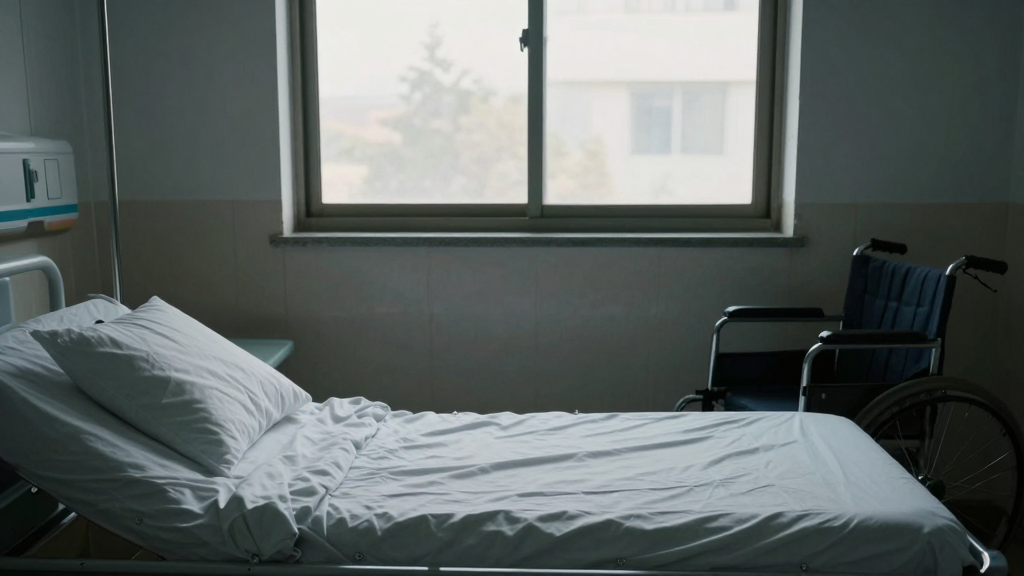
Someone is told the disease is advanced, the options are few, the odds are frank. Months later the scans are clean, the marker is gone, the ward that expected a decline records a recovery — and no one in the room can point to the treatment that did it. These accounts arrive from clinics, shrines, kitchens and comment threads, in many languages, and they are among the most emotionally charged reports a registry can hold.
Lightf1ow does not decide whether such a recovery was a miracle, a misdiagnosis, or medicine working quietly. It records that a recovery was reported, and how far the surrounding facts can be independently traced. That is a deliberately narrow claim, and holding to it is the whole point.
What the category is
A report in this category is an account of someone recovering from a serious, often life-threatening illness without a medical explanation on record for why they did. Lightf1ow catalogues the reports: who recovered, from what, where and when, and how far the account traces — a named clinic and dated records, or a story with nothing behind it. It takes no position on cause, and it is never a reason to change anyone's care.
Here 'verified' carries an unusually strict and unusually modest meaning. It means the medical circumstances were independently corroborated — that the illness, and the recovery, are documented by sources that do not depend on each other. It never means a cure was supernatural, and never means one was proven. A fully verified case and a wholly ordinary one can look identical; the registry only reports the tracing, and leaves the cause open.
The moments that made the record
The Lourdes Medical Bureau, France, established 1883. At the pilgrimage town of Lourdes, a standing medical office was set up to examine claimed cures — and it was built to say no. Doctors of any faith or none may inspect the files; a case must involve a serious, documented illness and a complete, lasting, otherwise-unexplained recovery. In roughly 140 years, out of many thousands of claimed cures, only about seventy have been formally recognised as 'medically inexplicable' — a rate so low it is itself the landmark. The Bureau is cited by believers as rigour and by sceptics as proof of how little survives rigour.
Spontaneous regression in the oncology literature. Cancer medicine has long documented rare cases where a tumour shrinks or disappears with no adequate treatment to explain it. A well-known 1966 compilation by the surgeons Tilden Everson and Warren Cole gathered scores of such cases from the medical record, and the phenomenon is now an accepted, if poorly understood, part of oncology — associated especially with cancers such as melanoma, kidney cancer and certain childhood tumours. It is real, and it is extraordinarily rare, which is exactly why it cuts both ways.
Alexis Carrel at Lourdes, 1902. A young French surgeon — later a Nobel laureate — watched a woman with advanced tubercular peritonitis appear to recover rapidly before his eyes at Lourdes. He could neither explain it nor dismiss it, wrote about it honestly, and paid for that honesty with his academic standing. The episode is retold by every side: as testimony from a serious scientist, and as a caution about how a single unrepeatable observation resists all later checking.
The reporting shape is a recovery witnessed by patients, families and sometimes clinicians, but only sometimes anchored to records that outsiders can inspect. Where those records exist and independently agree, a case can trace far; where the story is all that remains, it stays a report. That split is exactly what the evidence distribution below shows.
Why this is contested
Every camp, fairly stated; a side for none. This is the chapter only a registry can write — we are the one place that does not need anyone to win.
The sceptics' account
Sceptics point to well-understood, entirely natural explanations that do not need anything unexplained: the original diagnosis was wrong; the illness was one that spontaneously remits; a treatment or its lingering effect went unrecorded; or an ordinary fluctuation was read, after the fact, as a turning point. Absent complete before-and-after records from independent hands, they argue, 'inexplicable' usually means 'not yet explained' or 'not properly documented'.
The witnesses' / believers' account
Patients, families and some clinicians describe recoveries whose speed, completeness and timing they say the ordinary explanations do not cover — sometimes with scans and pathology on both sides of the change. They ask that a carefully documented, otherwise-unexplained recovery be recorded as the striking fact it is, rather than assumed away.
Where medicine stands
Mainstream medicine accepts that spontaneous, unexplained recoveries genuinely occur and are genuinely rare, and studies them as biology yet to be understood — not as proof of the miraculous. It also stresses that these cases are no basis for changing anyone's treatment, and that the plural of anecdote is not evidence.
What the registry can and cannot say
Lightf1ow does not adjudicate the cause of a single recovery. It records that a recovery was reported and how far its circumstances trace. A verified case here means the facts were independently corroborated — nothing more, and nothing about cure or miracle. The registry promises no explanation and forecloses none.
The registry, live right now
The evidence, honestly
Unexplained recoveries sit overwhelmingly in reported: an account of a recovery, arriving in many languages, whose fuller medical record is not open to outside inspection. A meaningful minority have been searched and settled as unverifiable — looked for and not independently corroborated — and only a single case in our data has reached verified, where the surrounding circumstances were confirmed by sources that do not depend on one another.
That shape follows from the subject, not from doubt about the people. Medical facts live in confidential files; independent corroboration of an illness and its course is genuinely hard to assemble, so most honest, sincere reports stay reports. What you see is a picture of the evidence available, not a verdict on anyone's recovery — and never guidance about anyone's care.
Cases worth retelling
Every report on the radar
The same cards, gates and honesty invariants as the main flow — filtered to unexplained recoveries.
Browse all 6 on the radar →Questions people ask
Does a verified case here mean a miracle cure happened?
Why do so few of these recoveries ever verify?
Are unexplained recoveries actually real, or always misdiagnosis?
Explore the other categories on the radar
Lightf1ow tracks 16 categories of reported anomaly, each measured the same honest way.
Further reading
- Lourdes Office of Medical Observations ↗ — the deliberately strict body that examines claimed cures at Lourdes
- US National Cancer Institute ↗ — authoritative background on cancer and, in the literature, spontaneous regression