Stigmata
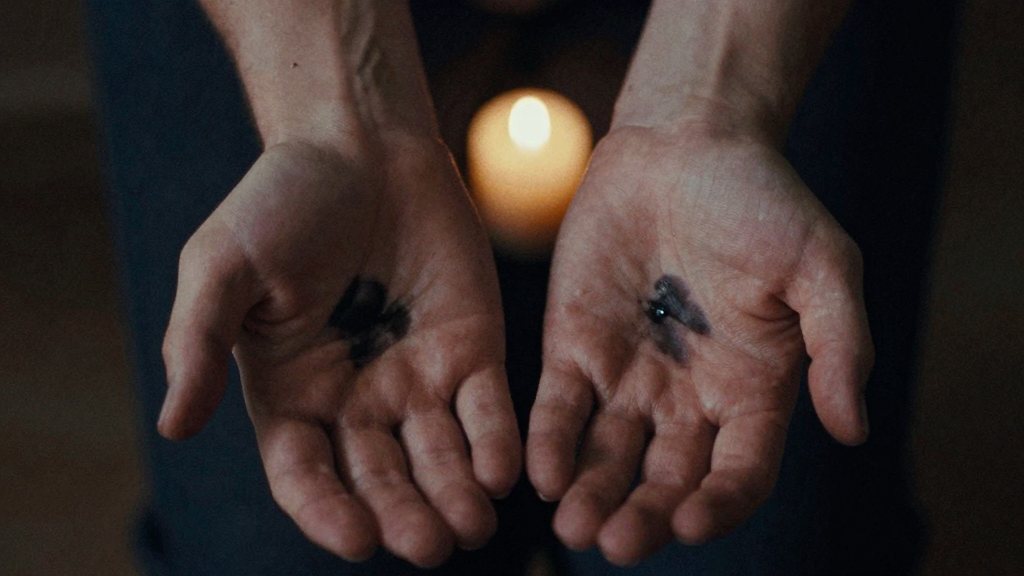
A person begins to bleed from the hands, the feet, the side — the places where Christ is said to have been wounded on the cross. There is no weapon, sometimes no obvious injury, and the marks return again and again, in some cases for decades. Around the bearer gather physicians, clergy and the curious, each asking the same question from a different direction. The registry holds these reports across eight centuries.
Almost none move past the report, and none in our data reaches the bar for an independently verified unexplained cause. That is not a dismissal of the people involved — it is what the evidence honestly supports, and the registry leaves it that visible.
What the category is
A stigmata report is an account that a living person has spontaneously developed wounds or bleeding corresponding to the wounds of the crucifixion — typically the hands or wrists, feet, and side. Lightf1ow catalogues the reports: who bore the marks, where and when, who examined them, and how far the account traces. It takes no position on their origin.
The distinction that carries this type is between the wounds being real and their cause being unexplained. That a person bled is often well documented; that no natural mechanism could account for it is the far harder claim. 'Verified' on Lightf1ow would mean only that unrelated sources agree on the reported facts — never that the origin was supernatural.
The moments that made the record
St Francis of Assisi, 1224. The founder of the Franciscan order is the first recorded case, said to have received the five wounds during a vision on Mount La Verna in the final years of his life. His case established stigmata as a recognised category within Christianity and remains the reference point against which every later account is read.
Padre Pio, 20th century. An Italian friar who bore visible wounds for roughly fifty years, from 1918 until his death in 1968. His case is a landmark because it unfolded in the modern era under sustained scrutiny — investigated by the Vatican and examined by physicians over decades — making it the most heavily documented stigmata claim on record, and a contested one.
Therese Neumann, Bavaria. A German laywoman of the early-to-mid twentieth century who reported the wounds along with claims of surviving on almost no food. She is often cited by sceptics precisely because the surrounding claims invited close testing, and because access for rigorous, controlled examination was limited — a case that shows how hard verification becomes in practice.
The reporting shape is that of a single bearer observed over time by clergy, doctors and devotees — rich in testimony and documentation, thin in the controlled evidence that could separate an unexplained cause from a natural one, which is exactly where the evidence distribution lands.
Why this is contested
Every camp, fairly stated; a side for none. This is the chapter only a registry can write — we are the one place that does not need anyone to win.
The sceptics' account
Sceptics point to self-infliction (conscious or not), skin conditions and psychogenic purpura, in which intense psychological states are documented to produce spontaneous bleeding. They note, tellingly, that wounds tend to appear in the palms — where devotional art places the nails — rather than the wrists, where Roman crucifixion actually drove them.
The witnesses' and believers' account
Witnesses describe wounds that persisted for years without healing or infecting, resisted treatment, and appeared in people of evident sincerity. Believers hold that the consistency and duration of some cases, and the character of the bearers, are not covered by simple deception.
Where medicine stands
Medicine treats stigmata as a phenomenon with plausible physiological and psychological mechanisms rather than an established miracle, and notes that rigorous controlled study has rarely been permitted. The Catholic Church itself is cautious, authenticating almost no cases and canonising bearers for holiness of life, not for the wounds.
What the registry can honestly say
The registry records the reports and how far they trace. It neither accuses the bearers of fraud nor certifies a miracle; it shows testimony and documentation for what they are, and marks where independent corroboration of an unexplained cause simply is not there.
The registry, live right now
The evidence, honestly
Stigmata sit mostly in reported, with a real tail that is searched but left unverifiable, and none in our data reaching verified. The reason is structural: the cases are few, centred on a single bearer, and observed mostly by devotees and clergy. Even the best-documented modern case turned on wounds whose cause could not be settled under controlled conditions, so the accounts trace far as testimony yet stop short of the converging, independent corroboration verification requires.
This is a picture of the evidence, not a judgement on the people. That nothing here reaches verified does not mean the wounds were faked or imagined — it means the specific, hard claim, that no natural mechanism could explain them, has never been independently established. The registry shows that gap rather than papering over it.
Cases worth retelling
Every report on the radar
The same cards, gates and honesty invariants as the main flow — filtered to stigmata.
Browse all 16 on the radar →Questions people ask
Has a case of stigmata ever been medically confirmed as miraculous?
Why does stigmata almost never verify?
Why do the wounds usually appear in the palms?
Explore the other categories on the radar
Lightf1ow tracks 16 categories of reported anomaly, each measured the same honest way.
Further reading
- Encyclopaedia Britannica — 'stigmata' ↗ — a neutral overview of the history and the medical explanations that have been proposed