Near-death and out-of-body experiences
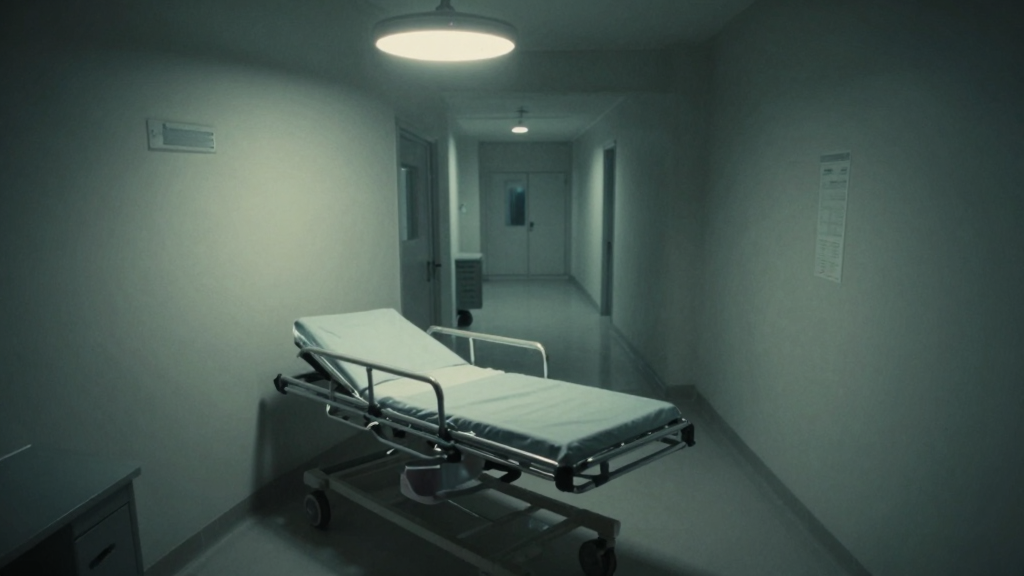
A patient is in cardiac arrest. The monitors are flat, the team is working the chest, and by every clinical measure the person is not there to experience anything. Later, brought back, some describe a tunnel, a light, a feeling of overwhelming peace, dead relatives waiting — and a smaller number describe having watched the resuscitation from above, reporting details they say they should not have been able to see. The registry holds these accounts in their hundreds.
The pull of the category is obvious and the trap is just as obvious. What can sometimes be checked is the medical circumstance — was there really a documented cardiac arrest, a flat line, a standstill on the operating table. What can never be checked is the destination. The registry keeps those two things rigorously apart.
What the category is
A near-death or out-of-body experience report is a first-person account of vivid, structured experience during a medical crisis or a period of apparent unconsciousness — a tunnel and light, a life review, a sense of leaving the body and observing it from outside. Lightf1ow catalogues the reports: who, in what medical circumstance, and how far the account traces. It takes no position on where, if anywhere, the person went.
This is the type where 'verified' is most easily misread. Here it means only that the surrounding circumstances — a documented cardiac arrest, a named hospital, a surgery on the record — were independently corroborated. It never means the afterlife, the tunnel, or the out-of-body view was confirmed. Those remain, by their nature, the witness's own testimony.
The moments that made the record
Pam Reynolds' standstill surgery, 1991 (Atlanta). To remove a giant brain aneurysm, surgeons cooled Reynolds' body, stopped her heart and drained the blood from her brain — a procedure called hypothermic cardiac arrest, or 'standstill'. She later reported observing parts of the operation and hearing specific things said in theatre. It is the case both sides return to, because the surgical circumstances were exceptionally well documented — which is precisely the kind of corroboration the registry can register, and precisely as far as it goes.
Pim van Lommel's prospective study, Lancet 2001 (Netherlands). A cardiologist and colleagues followed hundreds of resuscitated cardiac-arrest patients as they came in, rather than collecting stories after the fact. A significant minority reported a near-death experience; the study made the phenomenon a subject of mainstream medical publication rather than anecdote, without settling its cause.
Sam Parnia's AWARE studies, from 2008. Parnia's teams tried to test the out-of-body claim directly — for instance by placing images on high shelves, visible only from above, in resuscitation areas — to see whether any patient could report them. The verifiable 'view from the ceiling' has, so far, not been demonstrated under those controlled conditions, a result the sceptical side rightly emphasises.
The reporting shape here is distinctive: a powerful, sincere first-person account attached to a real medical event. The event can sometimes be corroborated; the experience essentially never can. That split is exactly why the category lands where the evidence distribution below shows it.
Why this is contested
Every camp, fairly stated; a side for none. This is the chapter only a registry can write — we are the one place that does not need anyone to win.
The sceptics' account
Psychologist Susan Blackmore and others argue these are experiences of the dying brain, not of a destination: oxygen starvation (anoxia), a flood of neurochemicals, and disturbances in the brain regions handling the body-map and the visual field can plausibly produce tunnels, light, euphoria and the felt sense of leaving the body. On this account the experiences are real and profound, and entirely internal.
The experiencers' account
Those who have had one often describe it as more vivid and more coherent than ordinary waking life, not the confusion of a failing brain — and point to reports of accurate perception during periods when, they argue, the brain should have produced nothing at all. They ask for that datum to be taken seriously, without claiming it proves where they were.
Where medicine and neuroscience stand
The mainstream position treats near-death experiences as a genuine and researchable brain phenomenon whose mechanism is not fully settled. Prospective studies establish that the experiences happen and are common; controlled tests of the specific out-of-body claim have not confirmed veridical perception. The cause remains open; the supernatural conclusion is not established.
What the ceiling teaches
The registry can sometimes confirm that the heart truly stopped; it can never confirm what was seen from above. It neither promises that the view was real nor forecloses it — it records the account, marks how far the circumstances trace, and refuses to let the second question ride on the first.
The registry, live right now
The evidence, honestly
Near-death and out-of-body reports sit overwhelmingly in unverifiable, with the remainder in reported. That is the honest signature of the category: the experience itself is private testimony that offers no second independent line, so once the account is searched it most often cannot be corroborated beyond its origin.
Only a handful ever reach verified — and where they do, it is the medical circumstance that converged across unrelated sources, never the destination. Those cases are shown as exactly that: a corroborated crisis around an uncorroborable experience. The distribution is a picture of the evidence, not a verdict on the people who lived through it.
Cases worth retelling
Every report on the radar
The same cards, gates and honesty invariants as the main flow — filtered to near-death and out-of-body experiences.
Browse all 481 on the radar →Questions people ask
Does a verified near-death experience prove there is an afterlife?
Why are so many marked 'unverifiable'?
Is there a scientific explanation?
Explore the other categories on the radar
Lightf1ow tracks 16 categories of reported anomaly, each measured the same honest way.
Further reading
- van Lommel et al., 'Near-death experience in survivors of cardiac arrest', The Lancet (2001) ↗ — the landmark prospective study, for readers who want the primary medical source