Marian apparitions
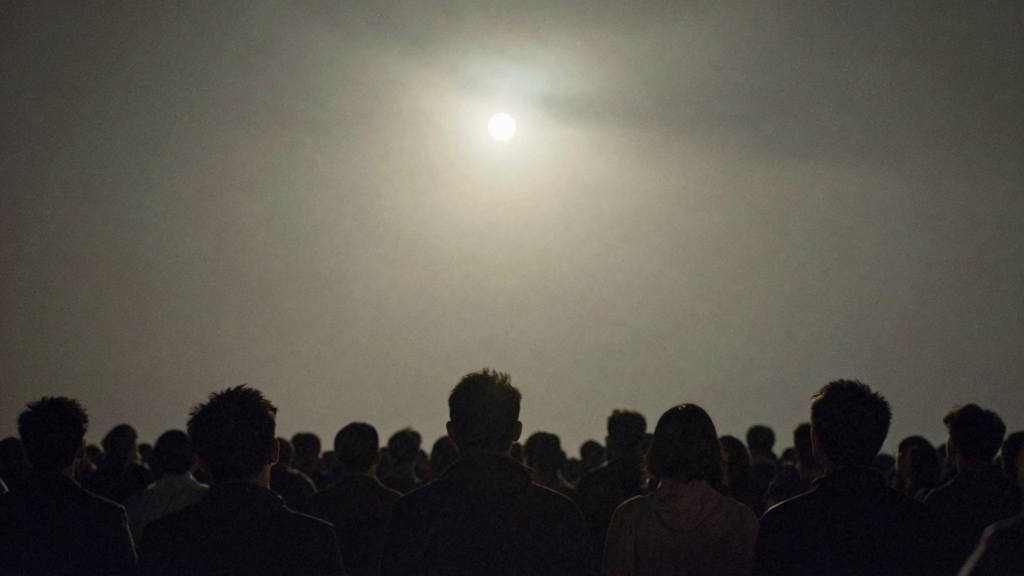
On 13 October 1917, an estimated seventy thousand people stood in the rain in a field near Fátima, Portugal, drawn by three shepherd children who had promised a sign. By the crowd's own collective account, the clouds broke and the sun trembled, spun, and plunged toward the earth before returning to its place. Believers, sceptics and newspaper reporters stood in the same field. A century later, the arguments about what happened there have not stopped.
Lightf1ow does not adjudicate that field. It records what was reported, by whom, and how far the account can be traced — and lets the strangeness, and the argument, stand in the open.
What the category is
A Marian apparition report is an account in which one or more people say they witnessed an appearance of the Virgin Mary — or, more broadly, a religious figure — at a specific place and time. Lightf1ow catalogues the reports: who is said to have witnessed the event, where, when, and how well the account traces back to independent sources. It does not, and cannot, decide whether an apparition took place.
This distinction is the load-bearing wall of the registry. A case marked verified means the reported circumstances were independently corroborated beyond the origin — that several unrelated outlets converged on the same event — never that the supernatural claim is confirmed.
The moments that made the record
Lourdes, 1858. A fourteen-year-old miller's daughter, Bernadette Soubirous, reported eighteen apparitions of a lady in a grotto at Massabielle. A spring she was said to have uncovered became one of the most-visited healing sites in the world; a medical bureau there still examines claimed cures to this day.
Fátima, 1917. Three shepherd children reported monthly apparitions across the summer, culminating in the October crowd event above — the account that, more than any other, moved apparition reports from the parish into the mass press.
Zeitoun, Cairo, 1968. For over a year, large crowds reported a luminous figure over the domes of a Coptic church. It is one of the rare apparition reports said to have been witnessed by thousands at once and photographed — which is exactly why it recurs in every debate since.
Medjugorje, 1981 →. Six young people in Bosnia-Herzegovina reported apparitions that, for some, continue to this day, sustaining a decades-long wave that still surfaces in our live data.
The pattern the whole record shows is consistent: reports cluster around a named seer or a named place, spread through the press, and — where a church investigates — acquire an institutional disposition that is separate from, and never a substitute for, independent corroboration.
Why this is contested
Every camp, fairly stated; a side for none. This is the chapter only a registry can write — we are the one place that does not need anyone to win.
The sceptics' account
Sceptics point to crowd suggestion and expectation, and — for solar events like Fátima — to well-documented optical effects of staring near the sun: retinal after-images, and atmospheric refraction through broken cloud. The absence of an instrument reading, they argue, is the whole problem.
The witnesses' account
Those present, and their defenders, point to detail and to unanimity across sceptics and believers in the same crowd, and to accounts from people who came to scoff. Sincerity, they note, is not proof — but it is also not nothing.
Where research stands
Church commissions investigate select cases for years; the Lourdes Medical Bureau applies deliberately strict criteria and confirms only a handful of the thousands of claimed cures. No scientific instrument has ever recorded an apparition, and serious researchers on all sides agree on that much.
The institutions' role
A Catholic recognition — 'worthy of belief' — is a pastoral judgement about a devotion, not a physical finding. Lightf1ow shows any such recognition as a separate provenance line, plainly, and never renders it as verified-green.
The registry, live right now
The evidence, honestly
Marian apparition reports reach verified more often than most categories — because they are, comparatively, well-witnessed and heavily reported: a named seer, a named sanctuary, and multiple unrelated outlets on the same event. Where enough of those outlets are independent of the origin, the reported circumstances converge.
Most reports nonetheless remain reported or unverifiable: an account can be sincere, widely circulated, and still lack independent corroboration. That gap is shown, not hidden.
Cases worth retelling
Every report on the radar
The same cards, gates and honesty invariants as the main flow — filtered to marian apparitions.
Browse all 18 on the radar →Questions people ask
What did the crowd at Fátima actually report?
Does a verified apparition mean the Virgin Mary appeared?
What about apparitions the Catholic Church has recognised?
Explore the other categories on the radar
Lightf1ow tracks 16 categories of reported anomaly, each measured the same honest way.
Further reading
- Lourdes — Sanctuaire Notre-Dame ↗ — the sanctuary's own record, and the Medical Bureau
- The Miracle Hunter ↗ — chronology and church dispositions of reported apparitions