Declared dead, found alive
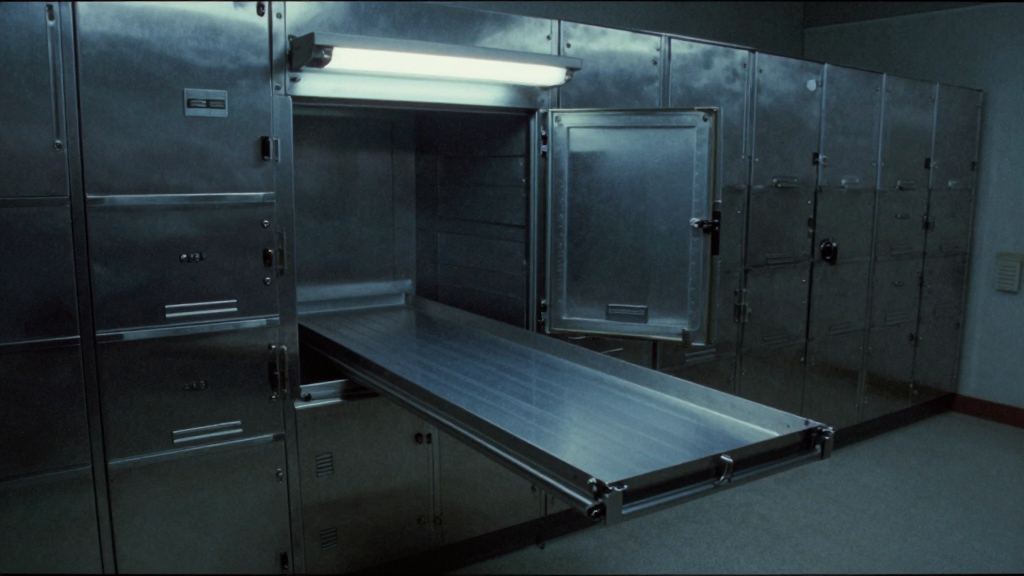
Every so often, somewhere in the world, a person who has been declared dead is found breathing — in a morgue drawer, inside a closed coffin, or on the way to their own funeral. The registry's archive layer carries such reports from the 1870s, and dozens of new ones reach the radar each month, from Ecuador to India to England.
What almost none of these reports establish is that the person had actually died. That is the quiet, unsettling centre of the category — and precisely the thing Lightf1ow refuses to overstate.
What the category is
This category — sometimes called 'Lazarus' cases, after the biblical account of a man raised from the dead — covers reports in which a person was declared or pronounced dead and was then found alive: they woke in a morgue or coffin, revived on the way to a funeral, or were discovered breathing after a death had been recorded. What is reported is a reversal of a declaration, with no indication the person actually died.
Lightf1ow records the report — who, where, when, what can be traced — never a verdict on the medicine. The event catalogued is the declaration-and-reversal as reported, not a claim about clinical death.
The moments that made the record
The buried-alive panic, 1800s. Nineteenth-century newspapers carried a steady stream of premature-burial accounts, real and rumoured, alarming enough to spawn a whole industry of 'safety coffins' fitted with bells and breathing tubes. Our archive layer holds examples from the 1870s onward.
The stage and the certificate, 1922. Period coverage in the registry reports the actress Anna Held declared dead by her physician, then said to have revived and begun breathing again — the kind of named, institution-anchored case that recurs across a century.
Lazarus syndrome, named 1982. Medicine itself catalogued the phenomenon of delayed spontaneous circulation after failed resuscitation, giving the folk-report a clinical name — and a reminder that 'declared dead, found alive' is not always paranormal.
The modern morgue error. The persistent contemporary version is the hospital or mortuary mistake — a patient pronounced dead, later found breathing — reported worldwide and across languages, and the backbone of this category in our live data.
Why this is contested
Every camp, fairly stated; a side for none. This is the chapter only a registry can write — we are the one place that does not need anyone to win.
The sceptics' account
Most such cases, sceptics argue, are exactly what they look like from the medicine's side: an erroneous or premature declaration. Hypothermia, deep sedation, drug overdose and catatonia can all mimic death closely enough to fool a hurried examination.
The medical account
Clinicians point to two well-documented things. The first is 'Lazarus syndrome' — a rare but recorded phenomenon in which a patient's circulation returns on its own, minutes after doctors have stopped attempting resuscitation and pronounced death; a few dozen cases are described in the medical literature. The second is plain examiner error: a faint pulse or shallow breathing missed in a hurried or under-equipped examination, especially where a doctor must certify death without monitors. Neither of these requires anything supernatural — and both are genuinely harrowing to live through.
The families' account
For the person who woke and the family who had begun to grieve, the experience is not a statistic. The registry keeps the human report visible without inflating the medical claim around it.
Where the evidence sits
The event is often press-reported with an institutional anchor; the medical claim — that a valid declaration was reversed — is hard to corroborate independently beyond the originating outlet. The registry marks that honestly.
The registry, live right now
The evidence, honestly
Declared-dead-found-alive reports sit heavily in reported and unverifiable. The event is press-reported and often anchored to a hospital or a named patient, but the medical claim rarely gains a second independent line beyond the origin.
A minority reach verified when several unrelated outlets converge on the same named case. Those exceptions are shown as such.
Cases worth retelling
Every report on the radar
The same cards, gates and honesty invariants as the main flow — filtered to declared dead, found alive.
Browse all 86 on the radar →Questions people ask
Does this mean these people came back from death?
Is 'declared dead, found alive' always paranormal?
Why are so many marked 'unverifiable'?
Explore the other categories on the radar
Lightf1ow tracks 16 categories of reported anomaly, each measured the same honest way.
Further reading
- Chronicling America (Library of Congress) ↗ — historic newspaper record — our archive layer's source for pre-1920 cases