Prophetic dreams and premonitions
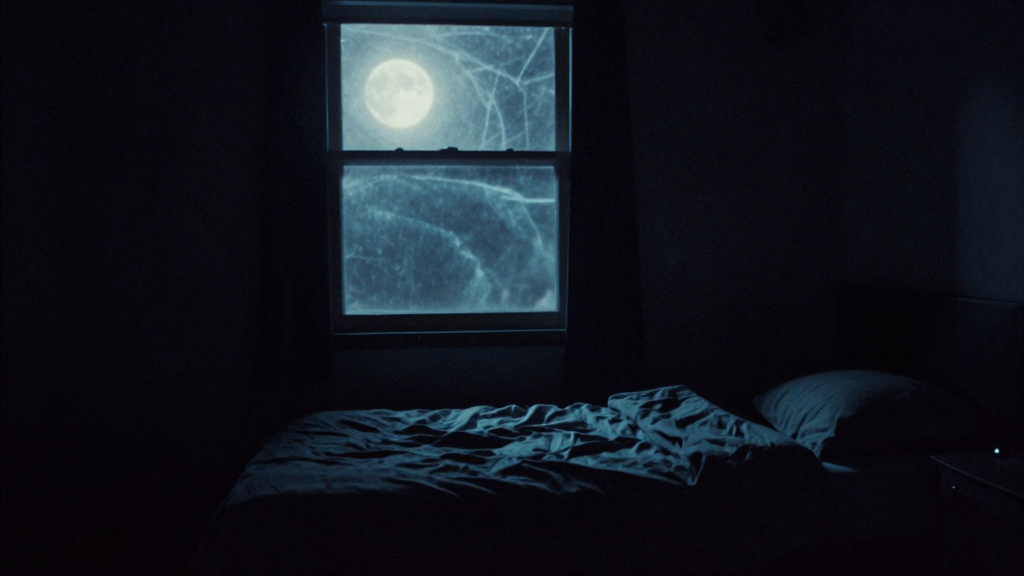
You wake with a scene still vivid behind your eyes — a phone call, an accident, a death — and days later the thing arrives, close enough to the dream to stop your breath. Almost everyone has had one that landed, or knows someone who did; the sensation of having been warned is one of the oldest and most universal human reports. The registry holds these accounts by the thousand, and this is its single largest category.
Lightf1ow does not decide whether any dream foretold anything. It records what was reported and, above all, when it can be shown to have been said — because a premonition is only more than a coincidence if it was fixed in the world before the event it names.
What the category is
A prophetic-dream or premonition report is an account in which someone says they foresaw a specific later event — in a dream, a vision, or a sudden unbidden certainty — before it occurred. Lightf1ow catalogues the reports: who is said to have foreseen what, where, when, and how far the account traces back to an independent source. It does not, and cannot, decide whether the future was actually glimpsed.
Here the load-bearing distinction is timing. A case could only approach verified if the premonition had been independently recorded — written down, told to a witness, logged with a third party — before the event, and unrelated sources converged on that record. That is vanishingly rare, which is exactly why this category sits where it does.
The moments that made the record
Lincoln's dream, Washington, 1865. According to his friend and self-appointed bodyguard Ward Hill Lamon, President Abraham Lincoln described a dream, days before his assassination, of mourners gathered around a corpse in the White House; asked who had died, a soldier in the dream answered, "The President — killed by an assassin." It is one of the most famous premonition accounts in history — and a caution, because it reaches us only through Lamon's much later retelling, with no record made at the time.
Aberfan, Wales, 1966. On 21 October a colliery spoil tip slid onto Pantglas Junior School in the village of Aberfan, killing 144 people, 116 of them children. Afterwards the psychiatrist John Barker collected scores of accounts from people who said they had foreseen the disaster — including a child said to have described her school buried under "something black" the day before. The case is the origin of the modern premonition, precisely because so many warnings surfaced only once there was a catastrophe to attach them to.
The British Premonitions Bureau, 1967. Barker's response was rigorous for its time: with a journalist he set up a bureau to log predictions in advance, so any hit could be dated before the fact. It received hundreds of submissions — and the honest result cuts against the phenomenon as much as for it: genuine advance hits were very few, and clustered among a handful of frequent correspondents whose many misses went uncounted.
The reporting shape is unmistakable and it explains everything downstream: the dream is almost always recalled and reported after the event it seems to predict, so it can rarely be dated to before — and what cannot be dated cannot converge.
Why this is contested
Every camp, fairly stated; a side for none. This is the chapter only a registry can write — we are the one place that does not need anyone to win.
The sceptics' account
In a world of billions of sleepers, billions of dreams occur every night; by sheer arithmetic, some will match a later event closely. Add confirmation bias — we vividly remember the hit and quietly forget the far more numerous misses — and retrofitting, where a vague dream is sharpened in memory to fit what happened. No warning system, they note, that logs hits after the fact can tell coincidence from foresight.
The witnesses' / believers' account
Those who have lived one point to specificity and to the physical force of the certainty — details, names, a dread out of all proportion to any ordinary worry — and to the minority of cases, like some logged with Barker's bureau, that were spoken aloud to a witness beforehand. Sincerity is not proof, they concede, but a warning acted upon is not nothing.
Where psychology stands
Mainstream psychology explains the experience through coincidence, selective memory and the brain's relentless pattern-seeking, and finds no reliable mechanism for precognition; parapsychology's controlled attempts to demonstrate foresight remain contested and not independently replicated to the wider field's satisfaction. The felt reality of the experience is not in dispute — its predictive power is.
What an honest registry can say
The registry promises nothing and forecloses nothing. It records the report, and it privileges the one thing that could ever settle the question — a warning fixed in the world before the event — while showing plainly how seldom that evidence exists.
The registry, live right now
The evidence, honestly
Prophetic-dream and premonition reports sit almost entirely in unverifiable, with a smaller minority resting at reported and — tellingly — essentially none reaching verified. As the largest category in the archive, it is also the one where the ceiling is lowest, and the reason is structural: to verify a premonition we would need it independently recorded before the event, and even the famous cases reach us as after-the-fact retellings.
This is not a verdict on the dreamers. It is an honest picture of a category built on memory and timing — where the very thing that would make a report extraordinary, a record made before, is the thing almost never present. The strangeness is left standing; only the claim of proof is withheld.
Cases worth retelling
Every report on the radar
The same cards, gates and honesty invariants as the main flow — filtered to prophetic dreams and premonitions.
Browse all 783 on the radar →Questions people ask
Can a dream really predict the future?
Why do prophetic dreams almost never verify?
Has a premonition ever been recorded before the event?
Explore the other categories on the radar
Lightf1ow tracks 16 categories of reported anomaly, each measured the same honest way.
Further reading
- Society for Psychical Research ↗ — archives and cautious research on premonitions, including John Barker's Aberfan work
- The Skeptic's Dictionary — precognition ↗ — the coincidence-and-memory account, stated plainly