Synchronicities
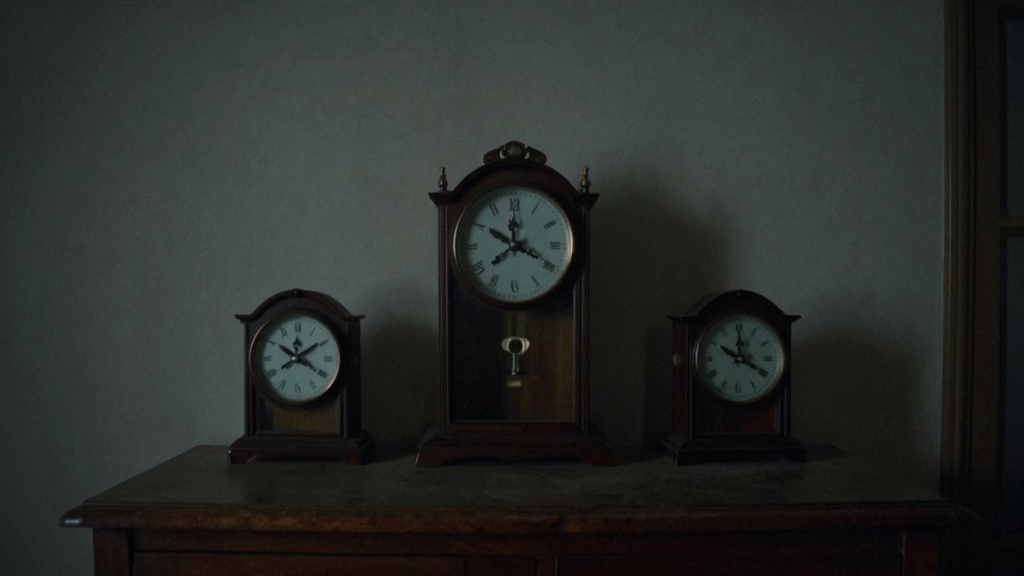
You think of an old friend for the first time in years, and within the hour they call. A word from last night's dream is staring up at you from the morning paper. A stranger on a train turns out to carry the one piece of news you were missing. Nothing was caused by anything else — and yet the timing lands with a weight that feels, unmistakably, like meaning.
Lightf1ow records that such a moment was reported, and how far its circumstances can be traced. It does not, and cannot, measure the meaning — because the meaning is the witness's, not the registry's, and honesty about that line is the whole point.
What the category is
A synchronicity report is an account of a meaningful coincidence: two or more events with no causal link between them that strike the witness as connected by significance rather than chance. Lightf1ow catalogues the reports: what coincided, for whom, where and when, and how far the account traces. It takes no position on whether the coincidence carried meaning.
The load-bearing distinction here is unusual. Even where the individual events are perfectly real and checkable, the connection a synchronicity claims is subjective — so verified could at most confirm that the events occurred and coincided, never that they were meaningfully linked. The felt meaning is not the kind of thing corroboration can reach.
The moments that made the record
Jung's scarab, 1950s. The Swiss psychiatrist Carl Jung coined the term "synchronicity" for meaningful coincidence, and illustrated it with a case from his own practice: a patient was recounting a dream of a golden scarab when a real beetle — a rose-chafer, the closest local analogue to a scarab — tapped at the consulting-room window, and Jung caught it and handed it to her. He published the idea in 1952 as "Synchronicity: An Acausal Connecting Principle," and the word entered ordinary language.
The Jung–Pauli dialogue. Jung developed the concept in correspondence with the Nobel-winning physicist Wolfgang Pauli, who was intrigued by whether meaning and matter might connect outside cause and effect. That a founder of quantum physics took the question seriously is why synchronicity has never quite been dismissable as mere mysticism — and why the argument endures.
The statistical rebuttal, 1989. The statisticians Persi Diaconis and Frederick Mosteller set out the "law of truly large numbers": across a large enough population and enough opportunities, wildly improbable coincidences are not just possible but expected. Alongside apophenia — the mind's tendency to see patterns in noise — and the "frequency illusion," where a thing newly noticed suddenly seems to appear everywhere, it supplies a full account of the experience without any acausal link.
The reporting shape is intimate and self-contained: a single witness, a private conjunction of otherwise ordinary events, and no external happening for unrelated outlets to converge upon — which maps directly onto where the category sits in the evidence.
Why this is contested
Every camp, fairly stated; a side for none. This is the chapter only a registry can write — we are the one place that does not need anyone to win.
The sceptics' account
By the law of truly large numbers, striking coincidences are statistically inevitable; we simply notice and remember the meaningful-seeming ones and ignore the vast background of non-coincidence. Apophenia and the frequency illusion do the rest, dressing ordinary chance in the feeling of significance.
The witnesses' / believers' account
Those who experience a synchronicity point to precision of timing and aptness of content that generic 'chance' seems too thin to cover, and to the undeniable subjective force of the moment. They ask not to be told the coincidence didn't happen — only that its meaning not be dismissed unheard.
Where psychology stands
Jungian depth psychology treats synchronicity as a real category of experience worth interpreting; mainstream cognitive psychology explains the same experience through probability and the brain's pattern-detection, and finds no acausal mechanism. Both camps agree the experience is real; they part on what it is evidence of.
The meaning is the witness's
The registry records that a meaningful coincidence was reported, and can sometimes confirm the underlying events occurred — but it never claims to have measured the meaning. It keeps the report visible and hands the meaning back to the person who felt it.
The registry, live right now
The evidence, honestly
Synchronicity reports sit mostly in unverifiable, with a modest minority at reported and essentially none at verified. The reason is built into the phenomenon: the 'event' is usually a private conjunction of ordinary happenings, with nothing public or singular for independent sources to converge on — and even where they could confirm the events, they could never confirm the link.
This is a picture of the evidence, not a verdict on the witnesses. A synchronicity is, by nature, a felt experience; the registry logs the report faithfully and is candid that corroboration stops exactly where the private sense of meaning begins.
Cases worth retelling
Every report on the radar
The same cards, gates and honesty invariants as the main flow — filtered to synchronicities.
Browse all 158 on the radar →Questions people ask
What is a synchronicity?
Why don't synchronicities verify?
Did Jung prove synchronicity is real?
Explore the other categories on the radar
Lightf1ow tracks 16 categories of reported anomaly, each measured the same honest way.
Further reading
- Stanford Encyclopedia of Philosophy — Carl Jung ↗ — scholarly account of Jung's thought, including synchronicity
- The Skeptic's Dictionary — apophenia ↗ — the pattern-perception and law-of-large-numbers explanation